
Infertility Treatment in Ahmedabad
Personalized fertility care for women, with careful evaluation, appropriate treatment, and support at every step.
Infertility Treatment at Shree Shreeji Women’s Hospital

At Shree Shreeji Women’s Hospital, we provide comprehensive infertility evaluation and treatment with a strong focus on women’s reproductive health. Difficulty conceiving can have different causes, including irregular ovulation, hormonal problems, PCOS, endometriosis, blocked fallopian tubes, fibroids, reduced ovarian reserve, and age-related changes in fertility. Our specialists assess each woman carefully to understand the possible cause before recommending treatment.
Depending on your fertility needs, treatment may include medicines to regulate ovulation, treatment for underlying reproductive conditions, IUI, or other assisted fertility procedures when required. We explain the findings, available options, and expected steps clearly so that you can make informed decisions about your treatment.
- Detailed Female Fertility Evaluation: A careful assessment helps identify hormonal, ovarian, uterine, or tubal factors affecting conception.
- Treatment Based on the Cause: Your treatment is planned according to your age, fertility history, test results, and reproductive health.
- Complete Guidance Through Treatment: From the first consultation through investigations and treatment, our team remains available to guide you.
Understanding Female Infertility
Infertility refers to difficulty achieving pregnancy despite regular unprotected intercourse over a period of time. In women, fertility can be affected by several factors involving ovulation, the ovaries, fallopian tubes, uterus, hormones, or age.
Some women may have irregular or absent ovulation, while others may have conditions such as PCOS, endometriosis, fibroids, adenomyosis, or blocked fallopian tubes. A decline in ovarian reserve and egg quality with increasing age can also affect the chances of pregnancy.
In some cases, no clear cause is found even after evaluation. This is known as unexplained infertility.
A proper fertility evaluation helps identify these factors and determine whether treatment is needed and which approach may be appropriate.
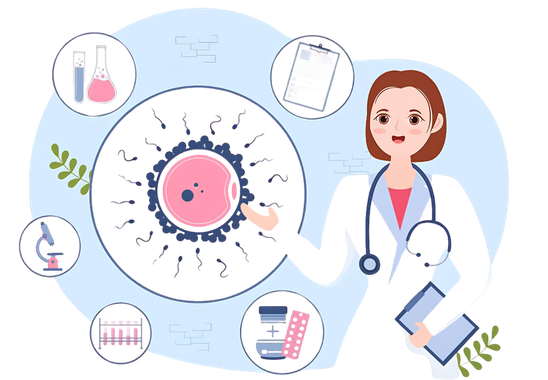
Common Causes of Infertility in Women
Ovulation Problems
Irregular or absent ovulation can make it difficult to conceive. Conditions such as PCOS, hormonal imbalances, thyroid disorders, and changes in prolactin levels may affect ovulation.
Polycystic Ovary Syndrome (PCOS)
PCOS is a common condition that can cause irregular periods and problems with ovulation. Proper evaluation and treatment can help improve reproductive health and support conception.
Endometriosis
Endometriosis can affect the ovaries, fallopian tubes, and surrounding pelvic tissues. It may cause painful periods and can sometimes interfere with fertility.
Blocked Fallopian Tubes
Blocked or damaged fallopian tubes can prevent the egg and sperm from meeting. Previous pelvic infections, surgery, or conditions such as endometriosis may contribute to tubal problems.
Fibroids and Uterine Conditions
Fibroids, adenomyosis, polyps, and other uterine conditions can sometimes affect implantation or pregnancy. Evaluation helps determine whether treatment is required before attempting conception.
Age-Related Fertility Changes
Female fertility gradually changes with age, particularly due to changes in egg quantity and quality. Early evaluation can be helpful when pregnancy is being planned at a later age.
Infertility Evaluation for Women
At Shree Shreeji Women’s Hospital, infertility evaluation begins with a detailed discussion about your menstrual cycle, previous pregnancies, medical history, surgeries, medications, and duration of trying to conceive.
Based on your history, appropriate investigations are recommended to understand your reproductive health.
Menstrual & Ovulation Assessment
Your menstrual cycle and ovulation pattern are reviewed to identify irregular or absent ovulation. Hormonal tests and ultrasound monitoring may be recommended when required to understand how your ovaries are functioning.
Ovarian Reserve Assessment
Tests such as AMH and ultrasound may be used to assess ovarian reserve. These findings help provide information about the available egg supply and assist in planning appropriate fertility treatment.
Uterus & Endometrium Evaluation
Ultrasound examination helps assess the uterus and endometrial lining for conditions such as fibroids, polyps, adenomyosis, or other abnormalities that may affect conception or implantation.
Fallopian Tube Assessment
Tests such as HSG or other suitable investigations may be recommended to check whether the fallopian tubes are open. This is an important part of evaluating female fertility in many women.
Hormonal Evaluation
Hormonal tests may be advised to identify conditions affecting ovulation or reproductive function. Depending on your symptoms and medical history, thyroid, prolactin, ovarian, or other hormone levels may be evaluated.
Infertility Treatment Options
Treatment depends on the cause of infertility, your age, ovarian reserve, medical history, and how long you have been trying to conceive. Options may range from medicines and ovulation monitoring to IUI and other assisted reproductive treatments when appropriate.
Ovulation Induction
Medicines may be prescribed to help women who do not ovulate regularly. Ovulation is monitored during the cycle to determine whether the treatment is working and to identify the appropriate time for conception attempts.
Treatment for PCOS-Related Infertility
For women with PCOS, treatment focuses on improving ovulation and addressing factors that may interfere with conception. The approach is selected according to your symptoms, menstrual pattern, and fertility goals.
Treatment for Endometriosis
When endometriosis is affecting fertility, treatment is planned according to its severity, location, symptoms, age, and reproductive plans. Medical or surgical treatment may be considered when appropriate.
IUI Treatment
Intrauterine insemination may be recommended in selected cases where the fallopian tubes are open and pregnancy is considered possible with less invasive treatment. Prepared sperm are placed directly into the uterus around the time of ovulation.
IVF & Assisted Reproductive Treatment
When other treatments are not suitable or have not resulted in pregnancy, IVF or other assisted reproductive options may be considered. Your specialist will explain the procedure, expected steps, and whether it is appropriate for your situation.
Why Choose Shree Shreeji Women’s Hospital for Infertility Treatment
Focused Fertility Care for Women at Every Stage




Frequently Asked Questions
When should a woman see a fertility specialist?
Women under 35 are generally advised to seek evaluation after 12 months of regular unprotected intercourse without pregnancy. Women aged 35 or above may benefit from evaluation after 6 months. Earlier assessment may be appropriate when periods are irregular, there is a history of endometriosis, previous pelvic surgery, recurrent pregnancy loss, or another known fertility concern.
What are the common causes of infertility in women?
Common causes include ovulation disorders, PCOS, endometriosis, blocked fallopian tubes, uterine conditions, reduced ovarian reserve, and age-related changes in fertility. In some women, no specific cause is identified.
Can PCOS cause infertility?
Yes. PCOS can interfere with regular ovulation, which can make conception more difficult. With appropriate evaluation and treatment, ovulation and fertility can often be improved.
Can blocked fallopian tubes cause infertility?
Yes. If both fallopian tubes are blocked, the egg and sperm may not be able to meet naturally. A fertility specialist can recommend appropriate tests to assess tubal patency.
Can infertility be treated without IVF?
In some cases, yes. Depending on the cause, treatment may include medicines, ovulation induction, treatment of an underlying condition, or IUI. IVF may be recommended when other options are not suitable or have not been successful.
Does age affect female fertility?
Yes. Female fertility gradually declines with age, mainly because the number and quality of eggs decrease over time. The effect varies between women, which is why individual evaluation is important.
What tests are done for female infertility?
Depending on your medical history, evaluation may include hormonal blood tests, AMH, ultrasound, ovulation monitoring, assessment of the uterus, and tests to check whether the fallopian tubes are open.
Can infertility be treated if no cause is found?
Yes. When routine investigations do not identify a specific cause, the condition may be called unexplained infertility. Treatment options such as ovulation induction, IUI, or IVF may be considered based on individual circumstances.