
Introduction
Periods do not always arrive on exactly the same day every month, and occasional changes can happen because of stress, illness, travel, weight changes, or other temporary factors. However, repeated irregular periods, unusually heavy bleeding, missed periods, or new symptoms may deserve medical attention.
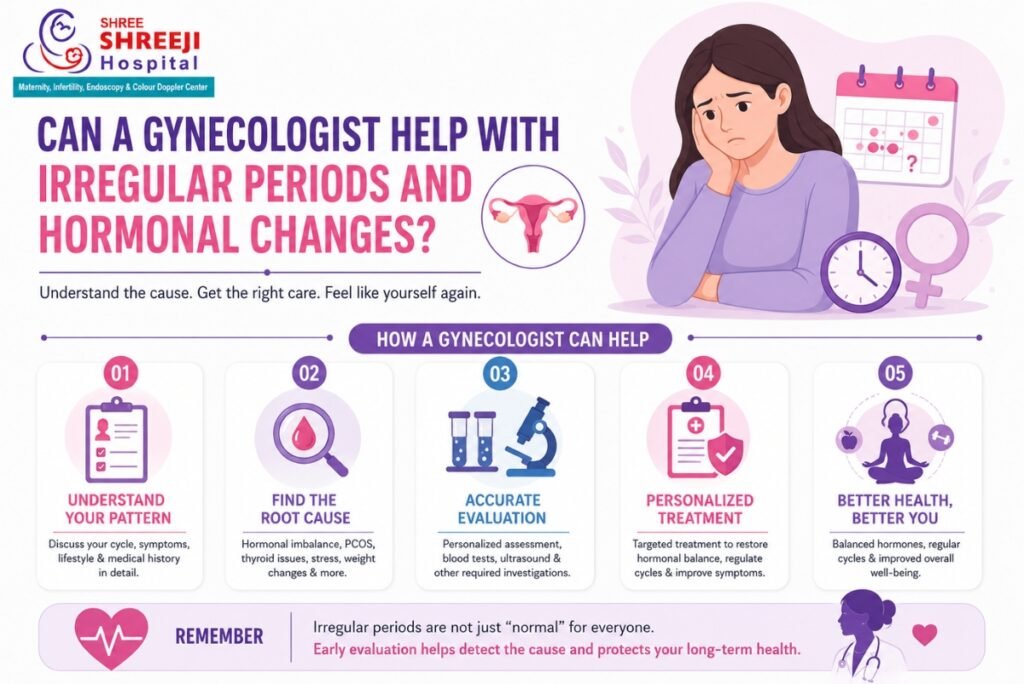
If you are searching for the best gynecologist in Ahmedabad, one of the most useful reasons to consult a gynecologist is to understand whether changes in your menstrual cycle are temporary or related to an underlying hormonal or gynecological condition. A proper evaluation can help identify possible causes and determine whether treatment or monitoring is appropriate.
What Counts as an Irregular Period?
A menstrual cycle can vary between individuals, and cycle length may also change at different stages of life. Irregular periods generally refer to menstrual cycles that are consistently unpredictable, unusually far apart, unusually frequent, or significantly different from your usual pattern.
You may notice:
- Periods arriving much earlier or later than expected
- Missing periods
- Very heavy menstrual bleeding
- Bleeding that lasts longer than usual
- Bleeding between periods
- Major changes in your usual menstrual pattern
One unusual cycle does not necessarily indicate a medical problem. The pattern over time, your age, symptoms, and overall health are more important when determining whether evaluation is needed.
Why Can Hormonal Changes Affect Your Menstrual Cycle?
Hormones play an important role in controlling ovulation and the menstrual cycle. When hormone levels change or ovulation becomes irregular, periods may become unpredictable.
Several factors can contribute to these changes, including:
- Polycystic ovary syndrome (PCOS)
- Thyroid disorders
- Significant weight gain or weight loss
- Excessive physical or emotional stress
- Certain medications
- Changes associated with puberty or perimenopause
- Pregnancy or breastfeeding
- Some underlying reproductive health conditions
PCOS, for example, can be associated with irregular ovulation and ssssssperiods. Thyroid problems can also affect menstrual patterns. However, similar symptoms can occur for different reasons, which is why it is not advisable to assume that a particular condition is responsible without medical assessment.
How Can a Gynecologist Find the Reason Behind Irregular Periods?
A gynecological consultation usually begins with a detailed discussion about your menstrual history and other symptoms.
Your doctor may ask about:
- When your periods started becoming irregular
- Your typical cycle length
- How long bleeding lasts
- The amount of bleeding
- Pelvic pain or discomfort
- Changes in weight
- Acne or increased facial or body hair
- Medicines and supplements
- Pregnancy possibility
- Stress, sleep, and lifestyle changes
- Previous medical or reproductive health problems
Depending on your symptoms, the evaluation may include a physical examination, pregnancy testing, blood tests, thyroid or other hormone assessments, or pelvic imaging such as an ultrasound.
The exact tests are not the same for everyone. A doctor generally selects investigations based on your age, symptoms, medical history, and clinical findings.
When Should Irregular Periods Be Medically Evaluated?
Not every change in your cycle requires immediate treatment, but persistent or significant changes should not be ignored.
Consider discussing your symptoms with a gynecologist if your periods repeatedly become irregular, you frequently miss periods without an expected reason, or your bleeding pattern changes substantially.
Medical assessment can be particularly important when menstrual changes occur alongside symptoms such as persistent pelvic pain, unusual vaginal bleeding, excessive hair growth, significant acne, unexplained weight changes, or difficulty becoming pregnant.
Very heavy bleeding accompanied by weakness, dizziness, fainting, or other concerning symptoms may require prompt medical attention.
The purpose of an evaluation is not simply to make periods more predictable. It is to determine whether there is an underlying cause that needs attention.
Can Treatment for Irregular Periods Be Personalized?
Yes. Treatment depends on why the menstrual cycle has changed.
If an underlying condition such as a thyroid disorder is identified, treatment may focus on that condition. If PCOS is contributing to irregular ovulation, management may involve lifestyle measures, medications, or other approaches depending on the individual’s symptoms and reproductive goals.
For some patients, hormonal medication may be considered to regulate bleeding or manage specific symptoms. For others, observation and follow-up may be more appropriate.
Treatment decisions can also be different for someone trying to conceive compared with someone who is not planning pregnancy. This is why simply taking medication to make periods regular without understanding the underlying cause may not address the actual problem.
What Other Symptoms Should You Mention During Your Appointment?
Irregular periods can sometimes occur alongside symptoms that provide important clues about hormonal or reproductive health.
Changes in skin or hair – Persistent acne, increased facial hair, or scalp hair thinning can sometimes occur with hormonal conditions such as PCOS, although these symptoms can have other causes as well.
Pelvic discomfort – Pelvic pain, painful periods, or pain during intercourse should be mentioned because they may point toward a separate gynecological concern requiring evaluation.
Fertility concerns – If irregular cycles are making it difficult to predict ovulation or you have been trying to become pregnant, tell your doctor. Irregular ovulation can affect fertility, and identifying the cause can help guide appropriate care.
Keeping track of your periods, bleeding patterns, symptoms, and medications before an appointment can also make the consultation more informative.
What Can You Do Before Seeing a Gynecologist?
A simple menstrual record can provide useful information. Note the first day of each period, approximate duration, unusually heavy bleeding, spotting, pain, and other symptoms.
It can also be helpful to record major lifestyle changes, medications, weight changes, or significant stress around the time your cycle changed.
If you are considering care with the best gynecologist in Ahmedabad, bring any previous ultrasound reports, blood test results, medication details, and relevant medical records to your consultation. This can help your doctor understand the history instead of evaluating the current symptoms in isolation.
When Should You Seek Professional Evaluation?
Irregular periods are common, but persistent changes should not automatically be dismissed as “just hormones.” Hormonal fluctuations are only one possible explanation, and the appropriate response depends on the individual.
Dr. Bhaumik Shah can assess menstrual changes in the context of your symptoms, medical history, examination findings, and, when appropriate, diagnostic tests. The goal of a consultation is to understand what may be causing the change and whether treatment, monitoring, or further evaluation is appropriate.
If you are looking for the best gynecologist in Ahmedabad, choose a consultation that focuses on understanding the reason behind your menstrual changes rather than simply treating the symptom. A personalized evaluation can help you understand whether the irregularity is temporary, related to hormonal changes, associated with another gynecological condition, or something that should be investigated further.