
Introduction
Weight changes are a common concern during the menopausal transition. Some women notice that their usual eating and activity patterns no longer produce the same results, while others experience a gradual increase in abdominal weight. These changes can be frustrating, particularly when they seem to occur without major lifestyle changes.
If you are searching for the best menopause clinic in Ahmedabad, it is important to understand that weight gain around menopause is not simply a matter of willpower. Age-related changes, hormonal fluctuations, muscle mass, sleep, stress, physical activity, and eating patterns can all influence body weight and fat distribution.
Understanding what may be contributing to the change can help you choose realistic and sustainable ways to manage it.
Why Can Your Body Change Around Menopause?
Menopause marks the end of menstrual periods after ovarian hormone production declines. The transition leading up to menopause, known as perimenopause, can last for several years and is associated with changing levels of hormones such as estrogen.
Hormonal changes can influence where the body tends to store fat. Many women notice more fat around the abdomen rather than the hips and thighs. At the same time, natural aging can contribute to a gradual reduction in muscle mass, which may affect how many calories the body uses at rest.
These changes do not mean that every woman will gain significant weight. Individual experiences vary, and lifestyle, genetics, sleep, medications, and other health conditions can also contribute.
Is Menopause the Only Reason for Weight Gain?
No. Menopause can be one factor, but unexplained weight gain should not automatically be attributed to hormonal changes.
Changes in body weight can also be associated with:
- Reduced physical activity
- Loss of muscle mass with age
- Poor sleep or persistent sleep disruption
- Increased stress
- Changes in eating patterns
- Certain medications
- Thyroid disorders
- Insulin resistance or other metabolic factors
- Other underlying health conditions
This is why a sudden or substantial change deserves attention, particularly when it occurs alongside other symptoms.
A healthcare professional can review your symptoms, medical history, lifestyle, and medications to determine whether further assessment may be appropriate.
Why Does Abdominal Weight Seem More Noticeable During Menopause?
One of the most noticeable changes for some women is an increase in abdominal fat.
Changes in estrogen levels may influence fat distribution, while aging and reduced muscle mass can also contribute to changes in body composition. Sleep problems and stress may further affect appetite, food choices, and daily activity.
It is important not to focus only on the number on the weighing scale. Waist measurement, muscle strength, blood pressure, blood sugar, cholesterol, physical fitness, and overall health can also provide useful information.
The goal should be improving overall health and body composition rather than pursuing rapid weight loss.
What Lifestyle Changes Can Actually Help?
There is no single menopause diet that works for everyone. Sustainable habits are generally more useful than restrictive diets that are difficult to maintain.
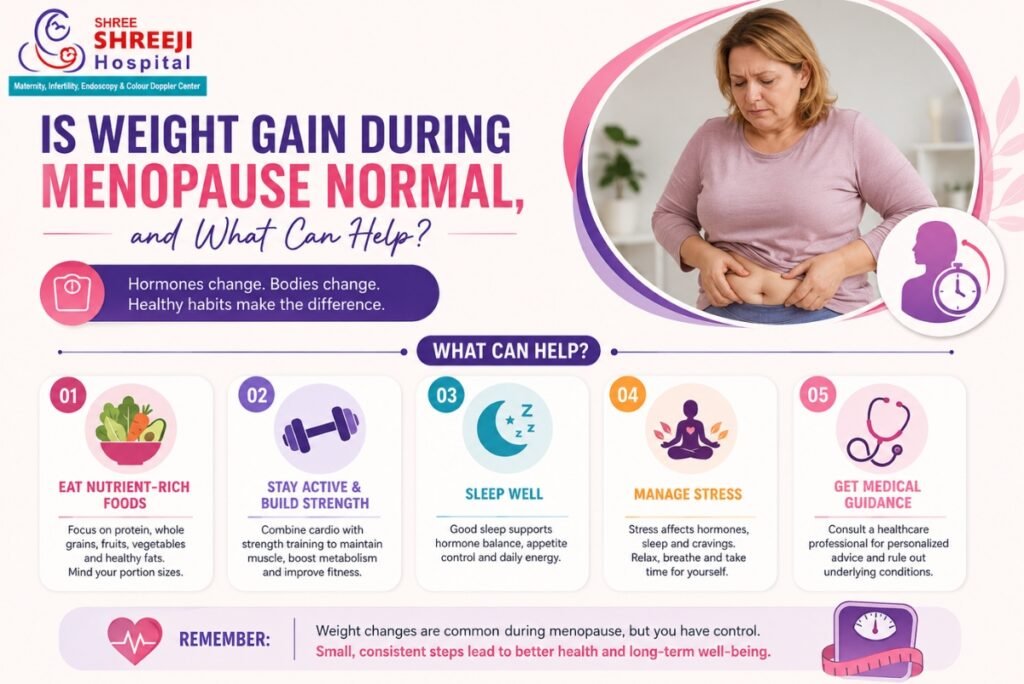
Prioritize protein and nutrient-rich foods – Adequate protein can support muscle maintenance, while vegetables, fruits, whole grains, legumes, and other nutrient-dense foods can help create a balanced eating pattern. Portion sizes still matter, but healthy eating does not require eliminating entire food groups unless medically indicated.
Include regular physical activity – Combining aerobic activity with resistance or strength training can be particularly useful during midlife. Strength exercises can help maintain muscle, while walking, cycling, swimming, or similar activities can support cardiovascular fitness and daily energy expenditure. The appropriate level of exercise depends on your health and fitness level.
Protect your sleep – Sleep difficulties are common around menopause. Poor sleep can make it harder to maintain healthy eating and activity habits and may affect appetite and energy levels. A consistent sleep schedule, a comfortable sleeping environment, and addressing persistent menopausal symptoms may help improve sleep quality.
Manage stress realistically – Long-term stress can affect sleep, eating habits, and daily activity. Relaxation techniques, regular movement, adequate rest, and activities that support emotional well-being can be useful components of a broader health plan.
When Should Weight Gain Be Discussed With a Healthcare Professional?
If weight increases gradually over several years, lifestyle and age-related factors may play a role. However, medical evaluation can be worthwhile when weight gain is rapid, unexplained, or accompanied by other changes.
Consider discussing it with a healthcare professional if you also experience persistent fatigue, significant changes in menstrual patterns, excessive thirst or urination, swelling, major sleep problems, or other unusual symptoms.
A clinician may review your medical history and medications and decide whether investigations such as blood glucose, lipid, thyroid, or other tests are appropriate. Testing should be based on your individual symptoms and risk factors rather than performed automatically.
For women considering the best menopause clinic in Ahmedabad, a personalized assessment can be more useful than following a generic weight-loss plan found online.
Can Menopause Treatment Help With Weight-Related Concerns?
Menopause treatment is not primarily a weight-loss treatment. However, managing troublesome menopausal symptoms may indirectly make healthy lifestyle changes easier.
For example, persistent hot flashes, night sweats, or sleep disruption can affect energy, mood, and daily activity. Treating appropriate menopausal symptoms may improve quality of life, although the effect on body weight varies between individuals.
Hormone therapy may be appropriate for some women with specific menopausal symptoms, but it is not suitable for everyone. The potential benefits and risks depend on factors such as age, medical history, symptoms, timing, and individual risk factors.
Medication or hormone treatment should therefore be considered through an individualized medical discussion rather than used solely for weight reduction.
What Is a Realistic Approach to Managing Weight After Menopause?
The most useful approach is usually gradual and sustainable rather than aggressive.
Instead of focusing only on losing a specific number of kilograms, consider goals such as maintaining muscle strength, improving fitness, eating balanced meals, sleeping better, staying physically active, and managing health risks such as high blood pressure or elevated blood sugar.
If you already have a healthy weight, preventing further unnecessary gain may be a more realistic goal than pursuing significant weight loss.
Your approach may also need to change over time. What worked in your 30s may not produce the same results during or after menopause, and that does not mean you have failed. It means your health and nutritional needs may have changed.
When Is Professional Guidance Especially Valuable?
Weight gain during menopause can be influenced by several overlapping factors, so a personalized evaluation can help distinguish expected midlife changes from problems that deserve medical attention.
Dr. Bhaumik Shah can assess menopause-related concerns in the context of an individual’s symptoms, medical history, and overall health and discuss appropriate management options without assuming that every woman needs the same treatment.
If you are considering the best menopause clinic in Ahmedabad, look for care that addresses the broader picture rather than focusing only on weight. Menopause management may involve understanding hormonal symptoms, sleep, physical activity, nutrition, metabolic health, and other factors that influence well-being.
Weight gain during menopause can be common, but it should not be treated as something women simply have to accept without support. With appropriate evaluation and sustainable lifestyle changes, many women can work toward healthier weight management and better overall well-being during this stage of life.