
Can IVF Help If You Have Blocked Fallopian Tubes?
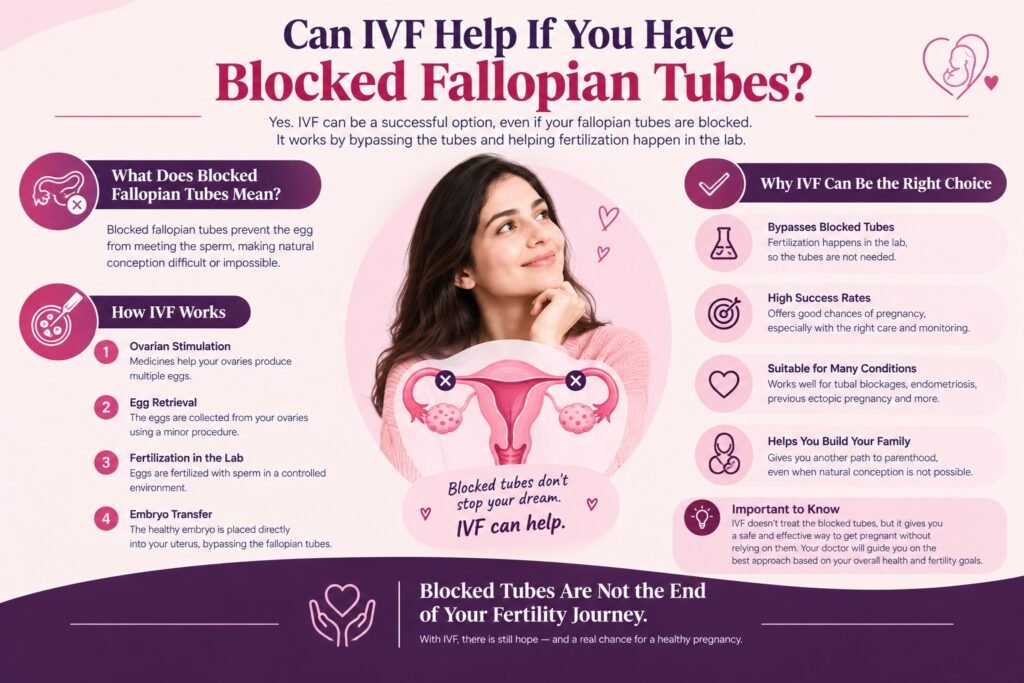
Introduction “My reports say my tubes are blocked. Does that mean I can never have a baby?” Many women ask this question with a heavy heart, often right after an HSG report lands in their hands. Please take a breath. A blocked tube is a common reason for delayed pregnancy, and it is very treatable. If you are looking for an IVF center in Ahmedabad, this guide will help you understand how IVF works around the problem and what to expect. What Are Fallopian Tubes and Why Do They Matter? You have two fallopian tubes, one on each side of your womb. Think of them as thin pathways connecting the ovaries to the uterus. Each month, an egg leaves the ovary and travels through a tube. Sperm swim up the same tube to meet it. Fertilisation normally happens right there, inside the tube. If the tube is blocked, the egg and sperm can’t meet. That’s why pregnancy doesn’t happen, even when everything else looks fine. How Do Fallopian Tubes Get Blocked? Blockage rarely happens overnight. It usually builds up quietly from an earlier problem. Common causes include: Pelvic infections: Untreated infections, including sexually transmitted ones, can leave scars inside the tubes. Endometriosis: Tissue similar to the womb lining grows outside the womb and can damage the tubes. Tuberculosis of the genital tract: This is a known cause in India and can go unnoticed for years. Past surgeries: Operations in the belly or pelvis, such as appendix or caesarean surgery, may cause scar bands called adhesions. Previous ectopic pregnancy: A pregnancy that grew in the tube can leave it damaged. Fibroids: Growths near the tube opening can press on it. Sometimes fluid collects in a blocked tube. This is called a hydrosalpinx. It can reduce IVF success if left alone, so doctors often treat it first. Will I Notice Any Symptoms? Often, no. This is what makes tubal blockage tricky. Many women feel perfectly healthy and only discover the problem after trying for a baby for a while. Some may have: Pain in the lower belly or pelvis Painful periods Unusual vaginal discharge But please don’t wait for symptoms. If pregnancy hasn’t happened after a year of trying (or six months if you are 35 or older), get evaluated. How Is a Tubal Blockage Diagnosed? Your doctor will usually suggest one or more simple tests: HSG (hysterosalpingography): A dye is passed into the womb, and an X-ray shows whether it flows through the tubes. Sonosalpingography: A similar check done with ultrasound. Laparoscopy: A small camera is inserted through a tiny cut in the belly to look at the tubes directly. It can also treat some problems at the same time. Your partner’s semen analysis and your hormone tests are usually done alongside. This gives a full picture rather than one piece of the puzzle. Can IVF Really Work with Blocked Tubes? Yes, and this is where IVF truly shines. In fact, blocked tubes were the original reason IVF was invented. In IVF, the egg is collected directly from the ovary and fertilised in the laboratory. The embryo is then placed straight into the womb. The tubes are never involved, so a blockage no longer matters. Success depends on a few things: Your age: Younger eggs generally give better results. Egg reserve: The number of healthy eggs you have left. Sperm quality: Your partner’s health plays an equal role. Womb health: A healthy lining helps the embryo settle. No doctor can promise a guaranteed outcome. But for women with tubal blockage and otherwise healthy reproductive systems, the chances are encouraging. What Happens During IVF, Step by Step? Knowing the steps can ease a lot of anxiety. Here is a simple overview: Ovarian stimulation: Injections for about 8 to 12 days help several eggs mature at once. Monitoring: Ultrasounds and blood tests track how your body is responding. Egg collection: A short procedure under mild sedation. Most women go home the same day. Fertilisation: Eggs and sperm are combined in the lab, and embryos grow for a few days. Embryo transfer: The best embryo is placed gently into the womb. It’s usually painless, like a routine check-up. Pregnancy test: A blood test about two weeks later gives the result. The waiting period can feel long. Rest, eat well, and lean on people you trust. Should I Try Surgery First or Go Straight to IVF? This is a very common question, and the honest answer is: it depends. Mild blockage or thin scars: Laparoscopic surgery may open the tube, and natural conception may be possible. Severe damage, both tubes blocked, or hydrosalpinx: IVF is usually the better choice. Age 35 or above: Time matters, so many doctors recommend moving to IVF sooner. Removed tubes: IVF is the only route to pregnancy. Your doctor should explain the benefits and limits of each option, so you can choose with confidence. How Do I Choose the Right IVF Center in Ahmedabad? Choosing where to go matters almost as much as the treatment itself. Look for: Experienced fertility specialists who take time to explain your reports A well-equipped embryology laboratory, since lab quality strongly affects results Honest counselling about costs, success rates, and possible risks Personalised care rather than a one-size-fits-all plan Emotional support throughout the journey Trust your instincts. You should feel heard and never pressured. Final Thoughts A blocked fallopian tube can feel like a closed door. But IVF offers a different path, one that goes around the blockage and gives many couples the chance to hold their baby. If you are searching for a caring and reliable IVF center in Ahmedabad, the team at Shree Shreeji Women’s Hospital is ready to review your reports, answer your questions, and guide you at a pace that feels right for you.
Can IVF Help If You Have Blocked Fallopian Tubes? Read More »