
Introduction
When surgery is recommended for a gynecological condition, it is natural to wonder whether laparoscopic surgery is actually suitable for you. Laparoscopy is a minimally invasive surgical technique that uses a camera and specialized instruments through small abdominal incisions. While it can be an appropriate option for many conditions, it is not automatically the right choice for every patient.
For someone researching the best laparoscopy surgeon in Ahmedabad, the more important question is whether this surgical approach is appropriate for their specific diagnosis, medical history, symptoms, and treatment goals. Understanding how doctors assess suitability can make the decision less confusing.
Could Laparoscopy Be Suitable for Your Particular Condition?
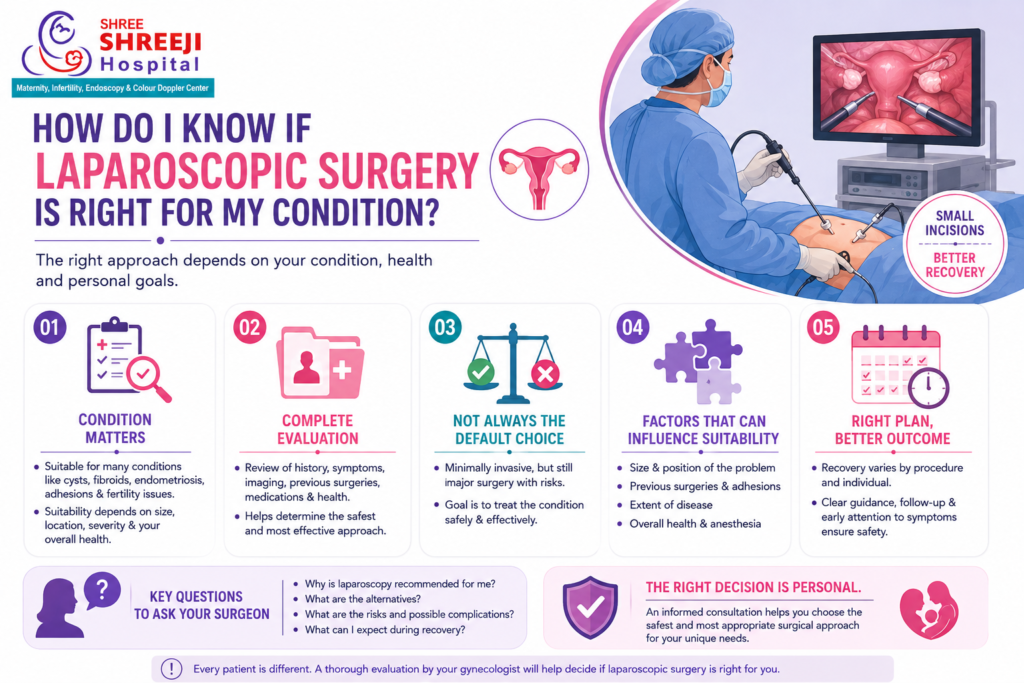
Laparoscopy can be used to investigate or treat several gynecological problems. Depending on the circumstances, it may be considered for conditions such as ovarian cysts, uterine fibroids, endometriosis, pelvic adhesions, and certain fertility-related problems.
However, having one of these conditions does not automatically mean that laparoscopic treatment is necessary. The same diagnosis can affect different patients in different ways. A surgeon may need to consider the size and location of the condition, the severity of symptoms, imaging findings, previous operations, and the patient’s overall health.
For this reason, suitability should be determined after an individual medical evaluation rather than by the diagnosis alone.
What Does a Surgeon Need to Know Before Recommending Laparoscopy?
A careful assessment helps the surgeon understand whether minimally invasive surgery is technically feasible and medically appropriate.
Depending on your condition, the evaluation may include:
- Your current symptoms and how they affect daily life
- Menstrual and gynecological history
- Previous abdominal or pelvic surgeries
- Ultrasound or other imaging results
- Existing medical conditions
- Current medications and allergies
- Previous experiences with anesthesia
- Pregnancy status when relevant
- Fertility plans and personal treatment goals
For example, a simple ovarian cyst may present very different surgical considerations from a large or complex cyst. Similarly, endometriosis can vary considerably in its extent and location. These differences can influence both the recommended procedure and the surgical approach.
Does Minimally Invasive Mean It Is Automatically the Better Choice?
Not always.
Laparoscopic surgery may offer advantages for appropriately selected patients, including smaller incisions and potentially less postoperative discomfort compared with some open procedures. Depending on the operation, some patients may also return to routine activities sooner.
But minimally invasive surgery is still real surgery. It may involve general anesthesia and carries potential risks such as bleeding, infection, injury to surrounding organs, blood clots, or anesthesia-related complications.
The objective should therefore not be to choose the smallest incision possible. The objective is to select an approach that can address the underlying condition safely and appropriately.
Which Factors Could Make Laparoscopic Surgery More Complex?
Several patient-specific factors can influence whether laparoscopy is suitable.
The size and position of the problem – The size, location, and characteristics of a cyst, fibroid, or other pelvic abnormality can affect whether it can be safely treated through laparoscopic access.
Previous abdominal or pelvic surgery – Previous operations can sometimes lead to internal adhesions, which are bands of scar tissue that may make surgical access more difficult. The extent of these adhesions cannot always be fully predicted before surgery.
Extent of endometriosis or other disease – Some gynecological conditions may involve multiple pelvic structures. More extensive disease can require additional planning and may affect the type or complexity of surgery required.
Overall health and anesthesia considerations – Medical conditions involving the heart, lungs, blood clotting, or other systems may influence whether a patient is suitable for anesthesia and surgery. These factors should be reviewed during the preoperative assessment.
None of these factors automatically means that laparoscopy cannot be performed. They simply show why the decision needs to be individualized.
When Might a Different Surgical Approach Be Considered?
Laparoscopy is a suitable option for many gynecological procedures, but it may not be appropriate in every situation. The surgeon may recommend a different surgical approach when the condition is particularly complex, difficult to access, or requires a level of visibility or control that cannot be safely achieved through minimally invasive techniques.
In some cases, the surgical plan may also need to change after the procedure begins. Unexpected findings, extensive internal scar tissue (adhesions), significant bleeding, or involvement of nearby organs may make a different approach safer.
This possibility is usually explained before surgery as part of informed consent. If the surgical team changes the approach during an operation, the decision is generally made based on the findings at that time and the priority of completing the procedure as safely as possible.
The important point for patients is that a different surgical approach does not necessarily mean something has gone wrong. It may simply reflect the surgeon’s assessment of what is safest and most appropriate for the individual condition.
How Should Recovery Expectations Influence Your Decision?
Recovery is another important part of discussing treatment, but it varies from one patient to another.
The recovery period can depend on the type of laparoscopic procedure, the extent of treatment, the patient’s general health, and whether additional procedures are performed. Your healthcare team may provide specific instructions about wound care, medicines, walking, exercise, driving, work, lifting, and follow-up appointments.
Patients should also know which symptoms require medical attention. Severe or increasing pain, heavy bleeding, fever, persistent vomiting, difficulty breathing, or concerning changes around an incision should be discussed promptly with the healthcare team.
Understanding the expected recovery process before surgery can help you plan appropriately and recognize when something may not be progressing as expected.
How Can You Decide Whether Laparoscopy Is Right for You?
There is no universal checklist that can determine whether every patient is a candidate for laparoscopic surgery. The decision is based on the specific diagnosis, symptoms, examination findings, imaging, previous medical and surgical history, overall health, and treatment objectives.
If you are looking for the best laparoscopy surgeon in Ahmedabad, focus less on a general ranking and more on whether the consultation provides a clear explanation of your individual treatment options. A responsible surgical discussion should explain why laparoscopy is being considered, what alternatives exist, what risks may be involved, and what recovery could involve.
For patients discussing laparoscopic treatment options, Dr. Bhaumik Shah can evaluate the individual clinical situation and explain whether a minimally invasive approach may be appropriate.
The Right Surgical Approach Depends on the Individual Patient
Laparoscopic surgery can be an effective option for appropriately selected patients, but it is not automatically suitable for every condition or every individual. A minimally invasive procedure should be recommended when the expected benefits and safety considerations fit the patient’s particular circumstances.
The most useful question is therefore not simply, “Can my condition be treated with laparoscopy?” Instead, ask, “Is laparoscopic surgery an appropriate and safe approach for my specific condition?”
If you are researching the best laparoscopy surgeon in Ahmedabad, an informed consultation can help you understand that decision and compare the available treatment approaches based on your own medical needs rather than general information found online.